
What It Means To Truly L.E.A.D. (Part 2)

Last week, I provided a list of things that a person should be doing in order to truly L.E.A.D. Here is Part 2 using the same acronym (L.E.A.D.)
Listen. True leaders are always listening. They know how important it is to keep an open ear to the members of their teams. Furthermore, they know HOW to listen properly – they realize that most times, it’s wiser to not actually say too much. Great leaders know how to read body language and also read between the lines by analyzing both verbal and non-verbal communication. In order to be a great leader, you have to become an expert at listening.
Encourage and Empower. True leaders know how to encourage and empower their team members. They are keenly aware that their team members have ambitions, goals, dreams, and aspirations of their own. They are not threatened by these things. Rather, they find ways to relate to and support them. You must learn to encourage your teams to get better if you want to be an effective leader. Team members should also be empowered to make decisions on their own. Leaders must work to cultivate trust and confidence between themselves and their direct reports. Leaders must empower their teams to get the job done.
Aspire. True leaders must also have goals and ambitions of their own. They must aspire to become great. It is important for leaders to understand and accept that they don’t already know everything. There is always room to improve. There is always a reason to learn more. Personal and professional aspirations are the hallmarks of great leaders.
Delegate. True leaders delegate. They know they can’t possibly do everything themselves without burning out. They don’t sweat the small stuff to the point that they lose focus on the big picture. They identify the best-performing team members and learn to rely on their performers with the highest potential to assist them with their duties. If you’re not delegating, you’re not really leading.
What are some other things that true leaders do? Comment below to get the conversation started.
Are you still looking for a Facilitator for this year’s Strategic Planning session? If so, we’d love to have a conversation with you!! Contact us today for a no-obligation chat on how we can assist you with what should be one of your most important tasks – planning for the future!!
Posted in Accountability, Building Relationships, Business Process Improvement, Change, Coaching, Collaboration, Conflict, Credit Unions, Culture, Decisions, Employee Development, Employees, Experiences, Gen X, Gen Y, Goal-setting, goals, Human Resources, Innovation, Inspiration, Leadership, Leadership Development, Management, Millennial, Motivation, Performance, Productivity, Professional Development, Strategic Planning, Training, Trust, Value, WIFM, WIIFM
Leave a comment
What It Means To Truly L.E.A.D.

“He who serves his fellows, is of all his fellows, greatest.” – Dr. E. Urner Goodman
True leadership is hard to find. There I said it. But it’s true. Too many “leaders” think it’s about their title or stature. Too many “leaders” believe that managing tasks is the only thing that needs to be done. Too many “leaders” spend way too much time putting out fires themselves instead of delegating. Too many “leaders” think they are too busy.
There are a few things that one must do in order to truly L.E.A.D. Ironically enough, the word LEAD is a great acronym for those things. So let’s go through L.E.A.D.
Learn. True leaders are always learning. They read voraciously. They attend workshops and conferences. They participate in webinars and roundtables. The most effective leaders in the history of the world were all students of knowledge. If you want to truly lead, you must become a student again. You must understand that you don’t already know everything and there is always room for improvement. You must seek to understand rather than be understood. You must learn.
Educate. True leaders know that one of their most important jobs is to educate the people who work for them. And it must go beyond telling people about product features. True leaders know that training and professional development opportunities motivate people to work harder, be more productive and work smarter. As Sir Richard Branson says, “Train people well enough so they can leave. Treat them well enough so they don’t want to.” You must understand, acknowledge, and respect the power of education and instruction.
Adapt. True leaders know that they must adapt to ever-changing circumstances. The market environment is fluid – it ebbs and flows. So too does the work environment. True leaders know that plans will need to be modified from time to time and that they should be prepared to give a little leeway once in a while. True leaders know that making excuses to avoid getting out of their comfort zones is a sure road to nowhere. You must adapt to the circumstances around you.
Decide. True leaders decide. Yes or no. Leaders are expected to make decisions and then stand by those decisions. True leaders don’t kick the can down the road. They don’t make excuses for indecision. They don’t blame others if a decision ends up being the wrong one. True leaders gather all of the facts, hear opinions, perform due diligence, and then they make a decision. You must become a decision-driven leader.
Obviously this just scratches the surface. What are some other things that true leaders do? Comment below to get the conversation started.
Posted in Accountability, Branding, Building Relationships, Business Process Improvement, Coaching, Collaboration, Conflict, Credit Unions, Culture, Decisions, Employee Development, Employees, Experiences, Gen X, Gen Y, Goal-setting, goals, Innovation, Inspiration, Leadership, Leadership Development, Management, Millennial, Motivation, Networking, Performance, Productivity, Professional Development, Training, Trust, Value, WIFM, WIIFM
Leave a comment
3 Ways To Improve Service

Service is one of the cornerstones of an organization’s success. If your service levels stink, you’re not going to grow. Here are 3 ways to improve your company’s service levels:
Constantly and consistently demonstrate VALUE. (Yes, this section is repeated from last week’s post because it is so vital!) Remember, it’s all about answering the W.I.I.F.M. question. What’s In It For Me? If you can’t answer that question, you’re sunk. In order to “onboard” or build relationships, a lot of companies incorporate cross-selling into their business models. That’s great but only if your employees are properly trained and your value proposition (your W.I.I.F.M. answer) is strong. You must constantly and consistently show people the VALUE in what you’re talking to them about. How will it change their lives for the better? What might happen should they decide not to act? Answer those questions and you’re on your way to demonstrating VALUE.
Leverage Technology. We live in a “right now” world. There’s no way around it. Your company must endeavor to leverage technology in order to improve service. Research shows that organizations that offer the latest in technology outperform those who might be stuck in the past. Your organization needs to make sure that it is up to date with the CONSUMER’S expectations of what constitutes great technology. Make it easy by using the right technology.
Tailored Interactions. Make your interactions as personal as possible (without being pushy.) Strive to gather, analyze, and use available data to learn as much as you can about your target audience. Then, create focused and tailored experiences for them. Remember that not every product or service is appropriate for everyone. Remember that your cross-selling or up-selling efforts should revolve around BUILDING RELATIONSHIPS as opposed to selling products.
What are your thoughts on this article? Share them below and let’s get a conversation started.
ATTENTION: We’re in the midst of strategic planning season. If your organization is looking for a FACILITATOR, perhaps we could schedule a time to chat about Your Full Potential’s services. You have nothing to lose – a conversation costs nothing!
Posted in Branding, Building Relationships, Business Development, Business Process Improvement, Change, Coaching, Collaboration, Credit Unions, Cross-Selling, Culture, Customer Service, Decisions, Employee Development, Experiences, Gen X, Gen Y, Human Resources, Innovation, Inspiration, Leadership, Leadership Development, Lending, Loans, Management, Marketing, Millennial, Motivation, Performance, Productivity, Service, Strategic Planning, Training, Value, WIFM, WIIFM
Leave a comment
3 Ways To Build Relationships With Consumers (ONBOARDING)

Organizations need 3 things to survive: new business, repeat business, and referral business. In today’s post, we’re going to discuss repeat business. How do you get consumers to come back to you after that first purchase? The secret lies in what is necessary to build relationships with people. Here are 3 ways to build long-lasting and mutually beneficial relationships with the people who do business with you:
WOW them. Let’s face facts – if you don’t do an awesome job the first time, they’re not coming back for a second round. So you must endeavor to WOW them from the start. Yes, under-promise and over-deliver. Yes, take the transaction a step further. Yes, do more than you’re asked. Then you’ll start to reap the rewards.
Make it ridiculously easy to do business with you. If you make people jump through the proverbial hoops to do something that can be streamlined or simplified, you’re going to lose business. Consumers can’t be bothered anymore with completing a clipboard full of forms. You must simplify AND automate. This is especially true for my readers in the financial services industry. The world is going mobile. It’s no longer the future. It’s the here and now. You must make it very easy for people to find information on your website and then to ACT on that information in a seamless manner. All of the various pages on my company’s website have a “call to action” that encourages visitors to contact me. What’s your “call to action?”
Constantly and consistently demonstrate VALUE. Remember, it’s all about answering the W.I.I.F.M. question. What’s In It For Me? If you can’t answer that question, you’re sunk. In order to “onboard” or build relationships, a lot of companies incorporate cross-selling into their business models. That’s great but only if your employees are properly trained and your value proposition (your W.I.I.F.M. answer) is strong. You must constantly and consistently show people the VALUE in what you’re talking to them about. How will it change their lives for the better? What might happen should they decide not to act? Answer those questions and you’re on your way to demonstrating VALUE.
What are your thoughts on this article? Share them below and let’s get a conversation started.
ATTENTION: We’re in the midst of strategic planning season. If your organization is looking for a FACILITATOR, perhaps we could schedule a time to chat about Your Full Potential’s services. You have nothing to lose – a conversation costs nothing!
Posted in Accountability, Branding, Building Relationships, Business Development, Business Process Improvement, Change, Coaching, Collaboration, Credit Unions, Cross-Selling, Culture, Digital Marketing, Experiences, Gen X, Gen Y, Global Network, Human Resources, Innovation, Inspiration, Leadership, Leadership Development, Lending, Loans, Management, Marketing, Millennial, Motivation, Networking, Performance, Productivity, Strategic Planning, Training, Trust, Value, WIFM, WIIFM
Leave a comment
4 Reasons Why Great Employees Leave

Organizations should always expect turnover – that’s business. The problem is that some organizations do some things so badly that the turnover involves their best and brightest employees. Here are 5 reasons why the best employees leave organizations:
They’re constantly being told “no.” Let’s face it. There are only so many times that a person can be rejected before they start to question whether or not they’re in the right place. “No” is part of business. No one is disputing that. But instead of a snap-reaction of “no,” perhaps companies can find ways to arrive at a compromise or even a “yes” from time to time.
They were lied to during the interview process. “Yes, we want to hire a change agent,” “We want you to shake things up and make them better,” “You’ll have a lot of latitude in your decision-making authority.” How many of us have heard these things only to find out once we started on the job that none of it was actually true? I’ve been through this personally and it just sucks. Great employees will not work for organizations that lie to them.
Poor Leadership. This is a big one. Great employees want to work for great leaders. They will seek out and follow great leaders. They will also shun poor leaders. If your leadership isn’t absurdly great, your best and brightest will simply leave. Count on it.
They’re not motivated or challenged enough. Great employees hate to do work that is boring or that doesn’t encourage and motivate them. Great employees want to be challenged and want to be pushed to the limits of their productivity. They want to be involved in team projects and innovation. They want to be “in the know.” They want to know that their work is important.
What are your thoughts on this article? Share them below and let’s get a conversation started.
ATTENTION: We’re in the midst of strategic planning season. If your organization is looking for a FACILITATOR, perhaps we could schedule a time to chat about Your Full Potential’s services. You have nothing to lose – a conversation costs nothing!
Posted in Accountability, Branding, Building Relationships, Business Development, Business Process Improvement, Change, Coaching, Conflict, Credit Unions, Culture, Employee Development, Employees, Experiences, Gen X, Gen Y, Goal-setting, Human Resources, Innovation, Inspiration, Leadership, Leadership Development, Management, Millennial, Motivation, Networking, Performance, Productivity, Professional Development, Strategic Planning, Training, Trust, Value, WIFM, WIIFM
Leave a comment
4 Steps To Creating A Robust Company Culture

An organization’s culture is an extension of its Value Proposition. If the Value Proposition is the answer to the question, “why should anyone do business with you, ever?” then culture is the methodology that is used to come up with that answer.
You should be aiming to create a culture of fun, innovation, creativity, and inclusion. More organizations are realizing the importance of a strong culture. There is plenty of evidence of that. Indeed, some of the most successful companies on the planet enjoy that level of success precisely because of the cultures they’ve created. I think of Southwest Airlines, Zappos, and yes, even Facebook.
There are a few steps to take when creating and implementing specific culture. These include:
Senior Buy-In – these efforts must be supported from the top-down. If that support doesn’t exist, it’s a moot point.
Employee Buy-In – the employees must be motivated to include themselves in the culture. If there are employees that can’t or won’t get “on the bus,” they either need to be better trained or separated from the organization. Just a few bad apples can spoil the whole effort.
Customer Attraction – those people whom the organizations serve must be excited by the culture. It should encourage them to do even more business and to refer others to do business. People enjoy flying Southwest Airlines. It’s (for the most part) a pleasant experience. The culture there plays a large part in that attraction. It’s a big reason why Southwest is the largest domestic carrier. I fly other airlines all the time as well. But I couldn’t tell you what the culture is at United or American Airlines. Southwest makes it a point to TELL ITS CUSTOMERS all about their culture – at every possible turn. That’s why it’s so successful!
There are 4 key tasks associated with implementing culture:
Training – employees need to learn HOW to do it YOUR way. (Think of the intense training Disney has for its employees.)
Encouragement – the employees need to be continually encouraged to play an active role and they should be rewarded in some way.
Measurement – efforts should be analyzed and measured on a continuous basis.
Revise – if changes are necessary, they should be made and implemented.
Obviously, this just scratches the surface.
What are your thoughts on culture? Share them below and let’s get a conversation started.
Are you looking for a FACILITATOR for your upcoming STRATEGIC PLANNING session? Check out our Strategic Planning page to learn more about our services and process.
Posted in Accountability, Branding, Building Relationships, Business Development, Business Process Improvement, Change, Coaching, Collaboration, Credit Unions, Cross-Selling, Culture, Digital Marketing, Employee Development, Employees, Experiences, Gen X, Gen Y, Goal-setting, Human Resources, Innovation, Inspiration, Leadership, Leadership Development, Management, Marketing, Millennial, Motivation, Performance, Productivity, Professional Development, Strategic Planning, Training, Trust, Value, WIFM, WIIFM
Leave a comment
The Irrefutable Law of Innovation
Back from my “road trip” odyssey/hiatus!! I’ve been “on the road” for much of the last month or so but I’m back in the saddle now and happy to bring you the latest blog post from Your Full Potential!
Let’s talk about innovation. We hear a lot about it. You may be innovators yourselves. Or you may work for an innovative organization. There is one irrefutable law of innovation that if enacted, will take you and your organizations to the very heights of innovation. It sounds simple enough but in reality, it takes a lot of hard work and dedication.
Here we go….
Make innovation part of your brand promise. Your brand is the essence of who you are and why you exist. If you really want to be known as innovative, you must make innovation part of your brand. Ask yourself if your organization is truly innovative or if you’re just giving lip service.
Do you encourage creativity or do you stifle it?
Are you hiring people with creative juices flowing through their veins?
Do you make it a point to REWARD people for innovative ideas – even if they’re not actually implemented?
Are you letting your target market know about all of the new things you’re doing? Do you even know who your target market is? (HINT: If you don’t, you’re not even close to being ready to innovate.)
Do you say “no” more than you say “yes” or “let’s give it a try”?
Do you engage in serious strategic planning? Do you create workable action plans with associated goals, timelines, measurement procedures, and accountability standards? What part does innovation play in your overall strategy?
Do you have a separate budget for innovation?
These questions are just a few of the many that you’ll need to answer if you want to be truly innovative. Don’t just say your organization is innovative. Mean what you say and be able to prove it.
Otherwise, you’re simply blowing hot air. And the world has enough of that already.
IT’s FINALLY HERE!!!!
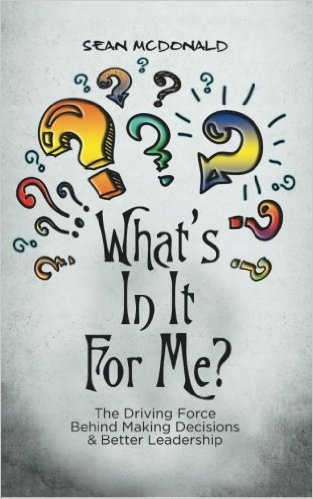
I am excited and honored to announce that my new book, What’s In It For Me? has been published!! It would mean so much to me if you, my loyal readers, would purchase a copy. It’s available in both paperback and Kindle editions and can be bought on Amazon.
Help me “break” Amazon by purchasing your copy today!!
Thank you all for your continued support! It means the world to me!
Posted in Accountability, Budgets, Building Relationships, Business Development, Business Process Improvement, Change, Decisions, Employee Development, Employees, Experiences, Gen X, Gen Y, Goal-setting, goals, Human Resources, Innovation, Inspiration, Leadership, Leadership Development, Management, Millennial, Motivation, Networking, Performance, Productivity, Professional Development, Strategic Planning, Succession Planning, Training, Trust, Value, WIFM, WIIFM
Leave a comment
3 AWFUL Excuses For Not Training Your Employees

“You don’t build a business. You build people – and then the people build the business.” – Zig Ziglar
The truth in that statement is so profound that I say to myself, “why don’t more business executives understand this?” I have been speaking a lot recently to executives and directors about the importance of developing employees. One of my favorite things to say is that an organization only grows as much as its people are allowed to grow.
Sometimes, I get a lot of head nods that indicate to me that at least some in the audience are agreeing with me. Then there are the dissenters that challenge me. Healthy debate, as long as it is respectful and constructive, is never a bad thing. But I must admit that I hear some pretty lame excuses from people that don’t think training or professional development are important. Here are 3:
Why should we hire consultants or trainers from the outside when we can do all of the training in-house? Not a terrible question; however, while your inside trainers are more than capable of teaching new hires the benefits of your organization’s specific products and services, they may not be as strong on the soft-skills – leadership, conflict management, project development, sales & service, etc. For stuff like that, you will benefit more from hiring an expert in those areas to come in with an objective point of view and a clean slate. This person will take an unbiased look at what is happening and will try to discover the root cause of the issue. Then, he or she can design a program to address the issue and provide solutions. Trainers from inside the organization may not be able to be unbiased and objective. Or, perhaps, they are part of the problem.
Training costs too much. Well, you get what you pay for I guess. Yes, there are costs associated with hiring professional trainers. You don’t expect us to work for free, do you? Many companies that have a great need for professional development are the same ones that haven’t kept up with the ever-changing demands of the marketplace. My point here is that some organizations really need to prioritize and realize that there are things that you must spend money on. If they don’t start to concentrate on helping the employees get better, they do so at their own peril.
If we provide all of this training, our best employees will just leave for better opportunities. Get over it. That’s the world we live in. If you are running a business, you have to accept that eventually some of your best employees will leave. And know this….if you decide against providing training and development opportunities to those same employees that you think will leave, they are already polishing their resumes and are looking to leave you anyway.
It’s time to get serious about attracting and retaining top talent. Professional development is guaranteed to help you do just that.
IT’S ALMOST HERE! My new book, What’s In It For Me? The Driving Force Behind Making Decisions & Better Leadership, will be available soon!! Be on the lookout for more information.
Posted in Building Relationships, Business Development, Business Process Improvement, Change, Coaching, Conflict, Decisions, Employee Development, Employees, Gen X, Gen Y, Goal-setting, goals, Human Resources, Innovation, Inspiration, Leadership, Leadership Development, Management, Millennial, Motivation, Performance, Productivity, Professional Development, Training, Value, WIFM, WIIFM
Tagged Management, Professional Development; Training
Leave a comment
4 Really LAME Excuses for Not Making Decisions

“Be decisive. Right or wrong, make a decision. The roads of life are paved with flat squirrels who couldn’t make a decision.”
– Unknown
The most effective leaders in history have a lot of things in common. To name a few: a great work ethic, high moral and ethical standards, an understanding of the principle of accountability, the ability to assemble a team of close advisors, etc.
There are others that are sometimes overlooked. The most effective leaders aren’t afraid to make decisions. They don’t keep people in the dark regarding their decision-making process. They are transparent and forthright. Most of all, they don’t ignore the people who are expecting them to make decisions.
Here are 4 of the lamest excuses that ineffective leaders use to avoid any semblance of making a decision.
I’m too busy – join the club! If you’re a leader, part of your job is to make decisions. So if you’re making time for all of the other stuff, you need to make time for decision-making as well. Enough said.
The timing isn’t quite right – Human beings are imperfect. Therefore, we are unable to do anything perfectly. That includes making important decisions. If leaders continue to use this ridiculous excuse to “kick the can down the road,” what they’ll find is that the opportunity that they did have is now gone because they put it off while waiting for the “time to be right.”
It might not work – It might not. Plenty of decisions have been made and the results weren’t exactly what were expected. That’s life. That’s business. But if you want to be an outstanding leader, you must accept that part of your job is to make the decisions that you think are the right ones by analyzing the potential services or solutions, trusting your gut, and taking action. Many organizations are stagnant. They are rudderless. They merely exist. More often than not, one of the biggest reasons for these unfortunate situations is that there exists a crippling fear of doing anything different because “it might not work.” Leaders that continuously use this crazy excuse need to step aside and make room for people that aren’t afraid to take calculated risks.
We have too much going on right now – that’s a good thing! Would you rather have the alternative? It’s perfectly acceptable and necessary to prioritize tasks. However, once you’ve decided which projects are the priorities, it’s important to move on those. But what happens sometimes is that people use this lame excuse to avoid moving on anything. A lot of organizations conduct planning retreats after the summer to prepare for the next year. This is the perfect time to identify the strategic initiatives that are the priorities for the organization. Once identified and agreed upon, make sure to budget for the various action steps for each initiative. Will things “come up” that may need immediate attention? Of course! That’s why you also budget an appropriate amount of money and resources for those items. But you make every reasonable effort to not let this extra “stuff” get in the way with the existing priority list.
No more excuses! Trust your gut, rely on your experience, gather all of the pertinent information and then…..DECIDE!
EXCITING NEWS!!! My new book, “What’s In It For Me?” will be published shortly. Keep an eye out for the announcement and help me “break” Amazon by purchasing a copy on the day it comes out!
Posted in Accountability, Building Relationships, Business Development, Business Process Improvement, Change, Conflict, Credit Unions, Decisions, Employees, Experiences, Gen X, Gen Y, Goal-setting, Human Resources, Innovation, Inspiration, Leadership, Leadership Development, Management, Millennial, Motivation, Networking, Performance, Productivity, Professional Development, Strategic Planning, Succession Planning, Training, Trust, Value, WIFM, WIIFM
3 Comments
When The Rains Come…..

First, Happy St. Patrick’s Day!!
It’s a gloomy, rainy day here in Houston, completely unbefitting the holiday. But I digress….
But as I was sitting on my patio early this morning surrounded by the gloominess, I was also able to reflect on the so-called “bright side” of things – hence, this post was born in my mind.
In our personal and professional lives, it is inevitable that the rains will come. Meaning, there will be times when we feel like giving up, the pressures get to be too much, or there is so much happening that we find it difficult to keep everything straight.
So when the rains do come (and they surely will) try these tactics to remind yourself of how very fortunate you really are….
When there is so much happening that you can’t keep things straight, remember that you are fortunate to have work to do. Too many people still don’t. Take inventory of everything that is fabulous in your life or work. You’ll most likely realize that things aren’t that bad.
When the pressure gets to be too much, do something that frees your mind. Take a walk, pick up a good book, or listen to some of your favorite music for a few minutes. In other words, allow yourself to take a break. It’s OK. It’s healthy. It will make you more productive and will at least give you a small respite from the pressure you’re feeling.
When you feel like giving up, remember that the next step is always more fruitful than the last.
Once again, Happy St. Patrick’s Day!
Is your organization looking for a motivational and knowledgeable trainer or speaker? Look no further! Your Full Potential offers a variety of speaking and training services. Full or half-day, keynote or breakout session, webinar or recorded training to use at your leisure – we have it all! Contact us for more information! Remember, it costs NOTHING to have a conversation!
Posted in Accountability, Building Relationships, Business Process Improvement, Change, Conflict, Decisions, Employee Development, Experiences, Gen X, Gen Y, Goal-setting, goals, Human Resources, Innovation, Inspiration, Leadership, Leadership Development, Management, Millennial, Motivation, Performance, Productivity, Professional Development, Training, Value, WIFM, WIIFM
Leave a comment
 Your Full Potential